

Soft Washing vs. Pressure Washing: Which Does Your GTA Home Need?
Two Very Different Methods
Pressure washing uses high-pressure water to blast away dirt, grime, and stains. Soft washing uses low pressure, closer to a garden hose, combined with specialized cleaning solutions that kill mould, algae, and bacteria at the root. Using the wrong one on the wrong surface is how expensive damage happens.
What Needs Soft Washing
Soft washing is the right method for roofs and shingles, vinyl and aluminum siding, stucco and EIFS, painted surfaces, wood fences and older decks, and anything with black streaks or green algae. The cleaning solution does the work, so there's no risk of cracking, gouging, or driving water behind the surface.
What Can Handle Pressure Washing
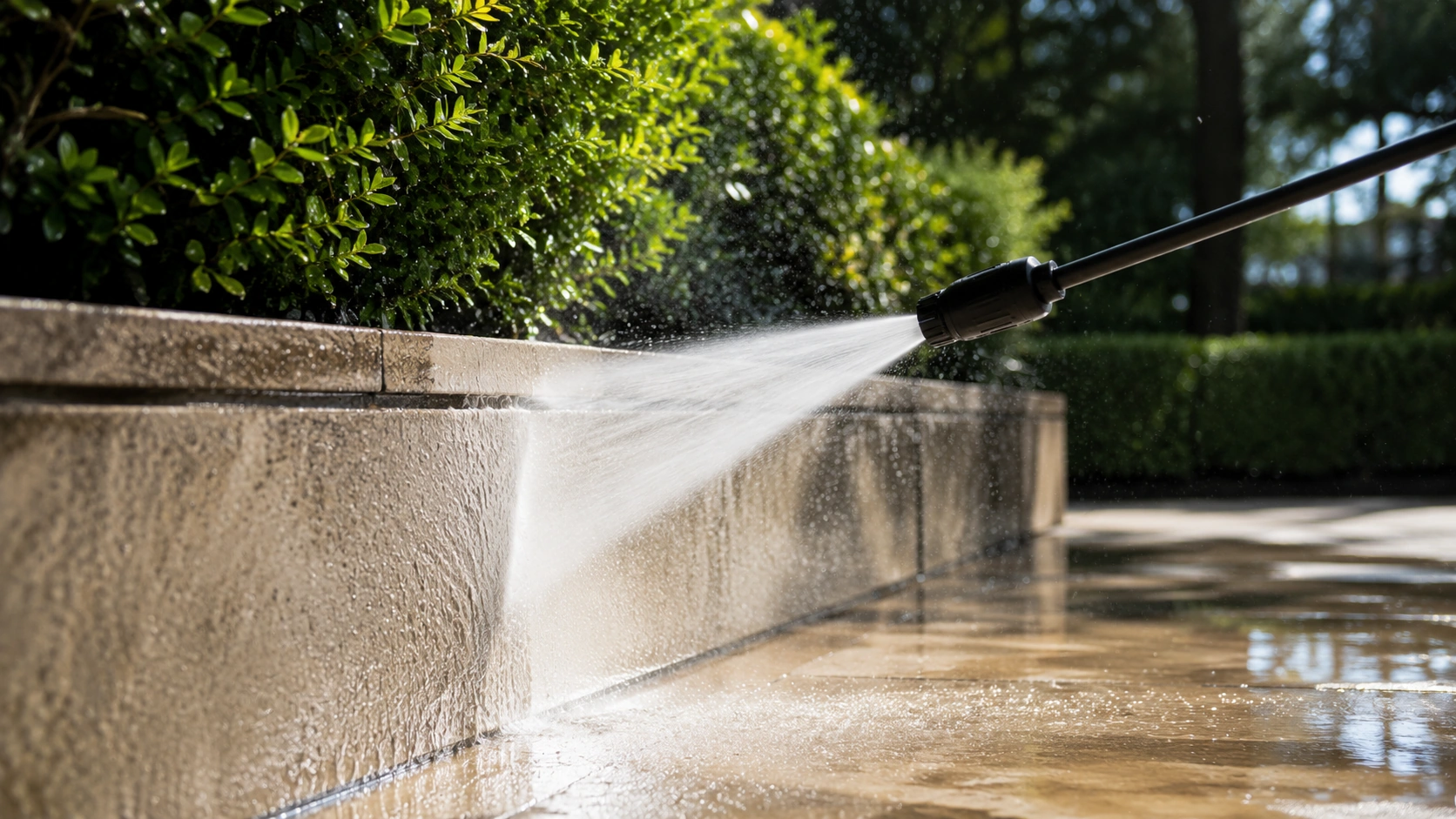
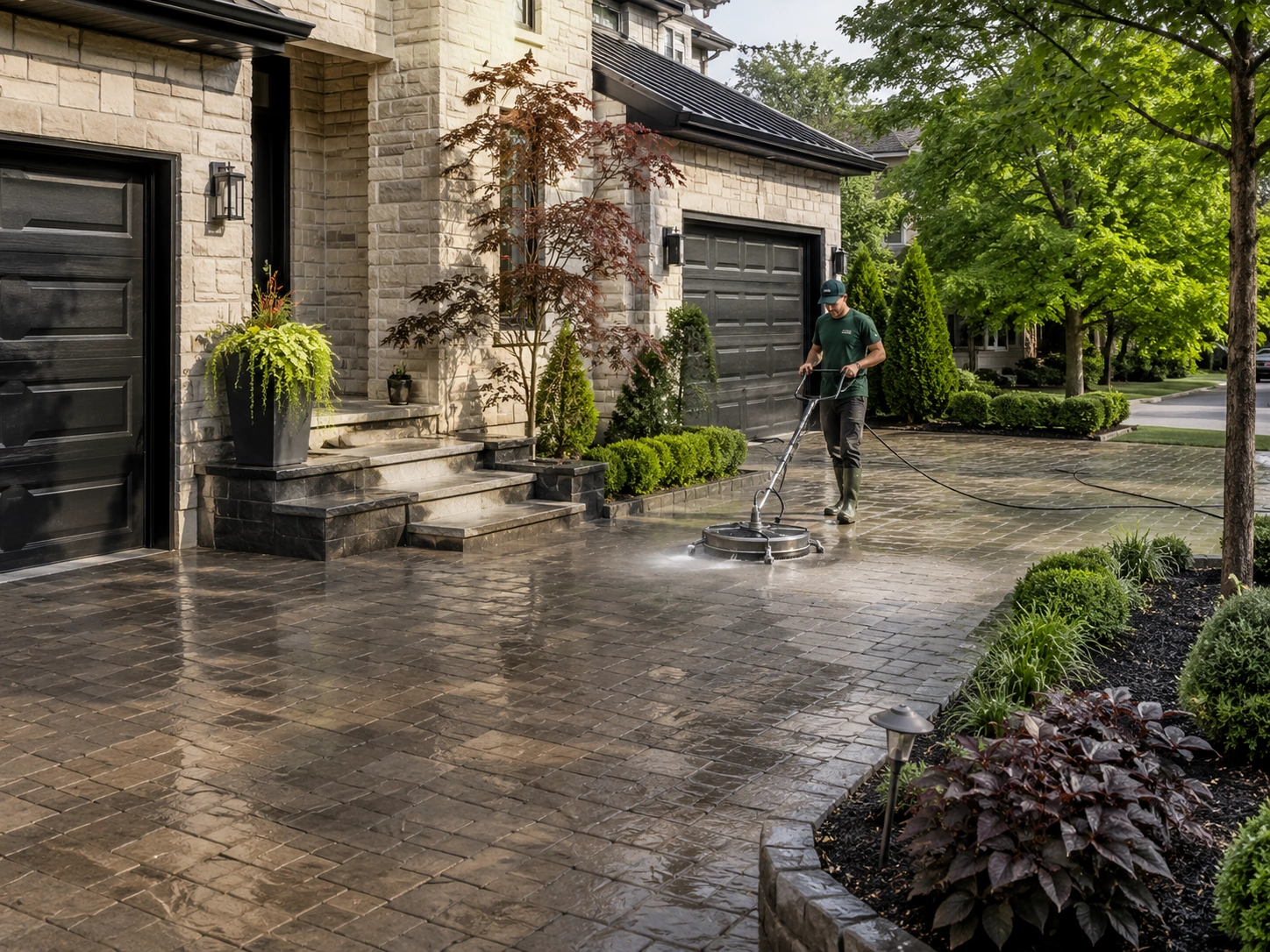
Hard, durable surfaces take pressure washing well: concrete driveways and walkways, interlocking pavers, brick, stone patios, and retaining walls. These materials can handle the force, and pressure is the fastest way to lift ground-in dirt, oil stains, and salt residue left over from a GTA winter.
Why the Wrong Method Costs You
Pressure washing a roof strips the protective granules off shingles and voids many warranties. On siding, it drives water behind the panels where it feeds mould and rots the sheathing. On wood, it carves out the soft grain and leaves permanent furrows. The repair bill almost always dwarfs what professional soft washing would have cost.
How Professionals Decide
A good crew reads the surface first: material, age, condition, and what's growing on it. Most GTA homes need a combination, soft washing for the house and roof, pressure washing for the driveway and patio. The skill is matching the method and the pressure to each surface so everything comes clean without damage.