

What Should You Power Wash After a GTA Winter?
Spring Is When Winter's Mess Shows Up
When the snow finally clears in the GTA, it reveals a season's worth of damage you could not see in January. Driveways and walkways are streaked with salt and grit. Siding has a dull film. Patios and shaded surfaces have gone green with algae. Spring power washing is how you reset all of it, but only if you match the method to the surface.
The mistake people make with a rented pressure washer is treating every surface the same and aiming maximum pressure at everything. That is how siding gets gouged, wood gets furred, and interlock joints get blown out. This guide covers what to clean, what to clean gently, and what road salt is actually doing to your concrete. For a deeper seasonal walkthrough, see our spring power washing article, and our power washing service if you would rather not risk it.
Safe to Power Wash
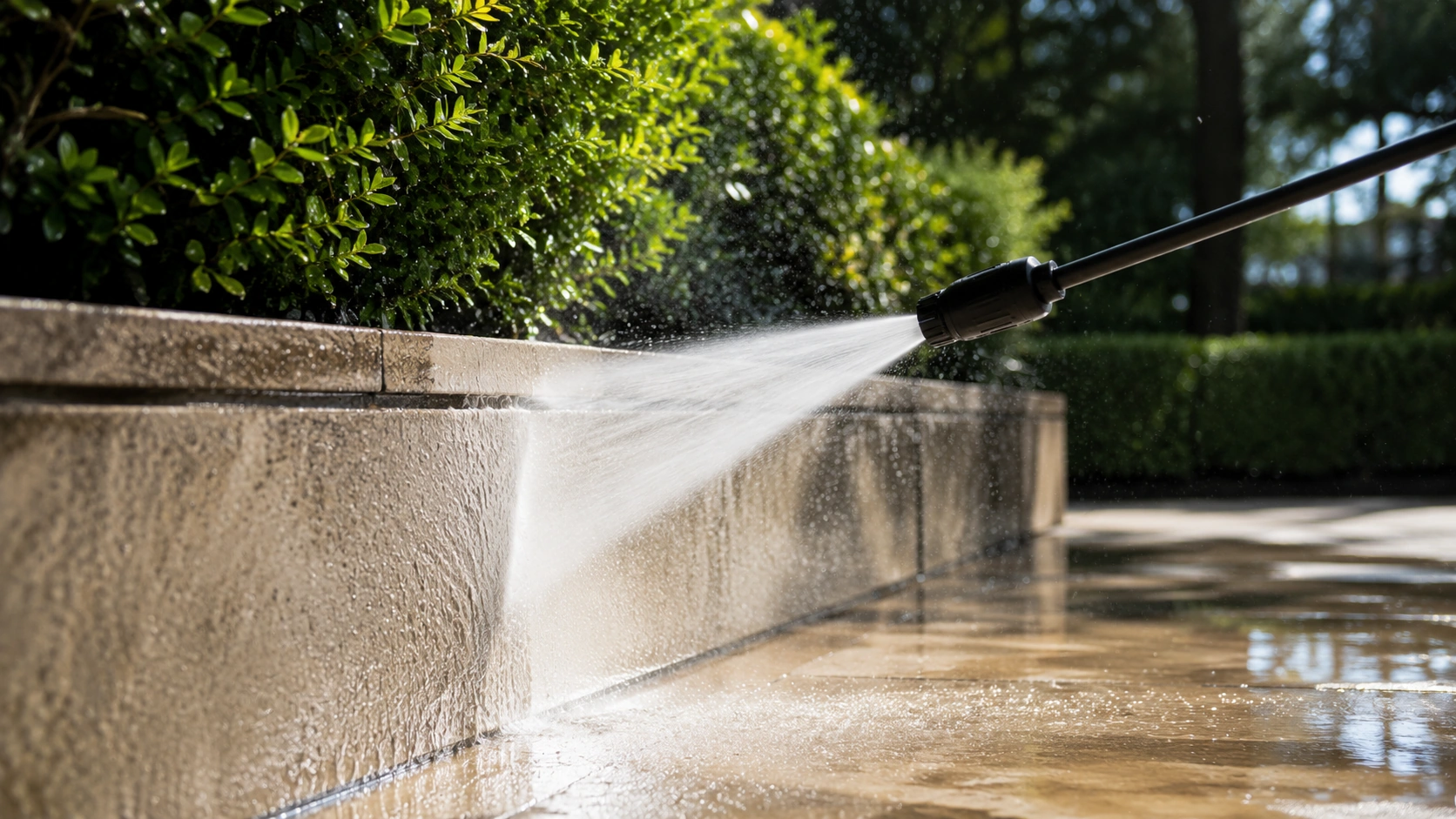
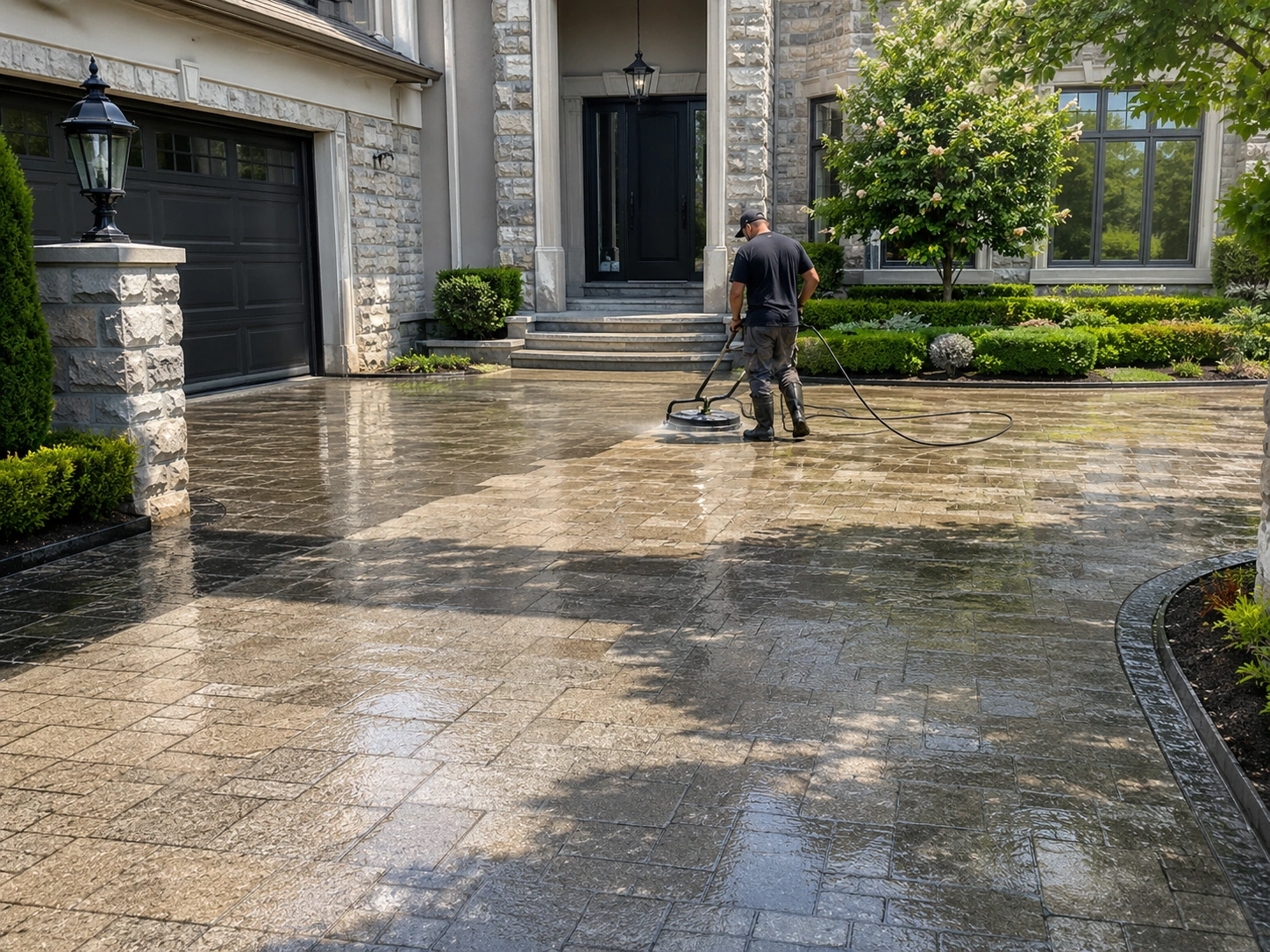
Concrete driveways, walkways, and garage floors handle pressure well and usually need it most after winter, because road salt and grit work deep into the surface. A surface cleaner attachment gives an even, streak-free result here. Interlock and pavers can be washed, but with care: too much pressure strips the joint sand and you will be re-sanding all season, so ease off and plan to top up the sand afterward.
Brick and stone are generally durable. The key everywhere is technique, keeping the nozzle moving, holding a consistent distance, and working in sections, rather than parking the spray in one spot and etching a line into the surface.
Soft Wash Instead
Some surfaces should never take high pressure. Vinyl and aluminum siding can be cracked, dented, or have water forced behind it, which causes worse problems than the dirt you are removing. Wood decks fur up and splinter under a hard blast. Anything with algae or mildew responds far better to a soft wash, low pressure plus the right cleaning solution that actually kills the growth rather than just spreading it around.
Soft washing is the difference between a surface that looks clean for a week and one that stays clean for a season. If a job involves siding, a painted surface, or organic growth, low pressure is almost always the right call. When in doubt, treat less pressure as the safer default.
What Road Salt Is Doing to Your Concrete
Road salt does more than leave white streaks. Through the GTA's repeated freeze-thaw cycles, salt drives water in and out of the concrete surface, which leads to scaling, the flaking and pitting you see on older driveways and steps. Washing salt off in spring is not just cosmetic; it slows that deterioration.
The same applies to interlock and stone. Salt residue left to sit accelerates surface wear and feeds the white efflorescence that dulls pavers. A thorough spring wash that lifts the season's salt is one of the cheapest things you can do to extend the life of your hard surfaces, which is exactly why we treat it as a priority job rather than a nice-to-have.
DIY Limits and Quote Factors
A rented washer can handle a small concrete pad if you are careful. The limits show up fast: inconsistent pressure leaves stripes, ladder work for second-storey siding is dangerous, and the wrong tip on the wrong surface causes damage you cannot undo. Removing deep oil stains, killing algae properly, and cleaning large or delicate areas is where professional equipment and soft-wash chemistry pay off.
A power washing quote depends on the surface area, the surface types involved, how heavy the staining is, and whether any soft washing or pre-treatment is needed. Bundling the driveway, walkways, and patio into one visit, or pairing it with window washing, is the efficient way to handle a full spring reset. Contact Set to Shine for an assessment.