

How to Maintain Interlock Before and After GTA Winters

Why GTA Winters Are Hard on Interlock
Interlock looks tough, and a well-built patio or driveway is. But the GTA climate puts pavers through dozens of freeze-thaw cycles every winter. Water works into the joints and the base, freezes, expands, and slowly lifts and shifts the stones. Add road salt, heavy snow loads, and downspouts dumping water in the wrong place, and a beautiful patio can start sinking, heaving, or sprouting weeds within a few seasons.
The good news is that interlock responds well to a simple seasonal routine. A little attention before and after winter prevents most of the expensive problems. This guide walks through what to do in fall to prepare, what to check in spring to recover, and the warning signs that mean it is time to call in interlock and landscaping help rather than reaching for another bag of sand.
Before Winter: Fall Preparation
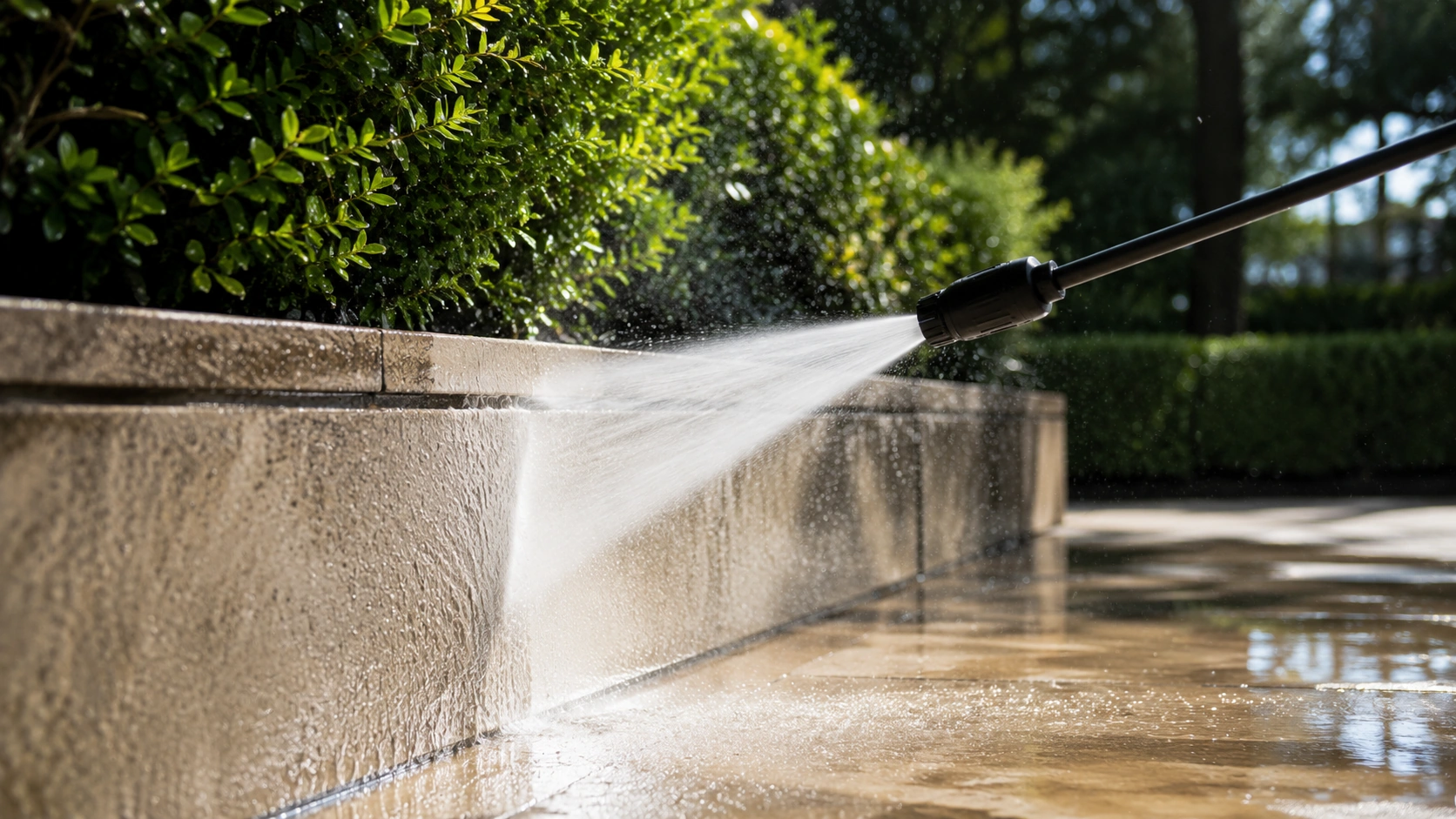
Fall prep is about keeping water out of the joints and base. Start by clearing leaves and debris off the surface and out of the gaps, because organic material traps moisture and feeds weeds and moss. Give the surface a proper clean, ideally a gentle wash rather than aggressive blasting, so you are not stripping out the joint sand.
Next, check the joint sand. If you can run a screwdriver deep into the gaps, the polymeric sand has worn down and should be topped up and re-set before winter, because empty joints let water straight into the base. Finally, look at where your downspouts drain. Water flowing directly onto pavers is the number one cause of settling in the GTA. Redirect it away from the hardscape before the freeze.
After Winter: Spring Recovery
Once the snow is gone, walk the whole surface and look for what moved. Lift any pavers that heaved, note spots where water pools after rain, and check the edges, since edge restraints often loosen over a hard winter and let the field of pavers spread. Sweep out salt residue and grit, then plan a spring wash to lift the winter film.
Spring is also the time to deal with weeds early, while they are small and the joint sand is exposed. Pulling weeds and re-sanding now is far easier than fighting an established root system in July. If you are washing the patio anyway, fold it into your spring power washing round so the whole hardscape gets reset at once.
Polymeric Sand, Sealing, and Salt
Polymeric sand is what holds interlock joints together and keeps weeds and water out. It does not last forever; in the GTA it typically needs refreshing every few years, sooner on driveways that get plowed and salted. When it fails, you will see weeds, moss, and loose stones. Re-sanding is a manageable job, but it has to be done dry and set correctly to actually harden.
On salt: avoid harsh de-icers directly on pavers where you can, because they accelerate surface scaling, the same way they damage concrete. Sand for traction and use de-icer sparingly. Sealing can add protection and color, but it is not mandatory and it is not a fix for a base or drainage problem. Sealant over a settling patio just hides the issue.
When It Is Repair, Not Maintenance
Some symptoms mean the base, not the surface, needs work. Pavers that keep sinking in the same spot, large dips that pool water, sections that rock underfoot, or a patio pulling away at the edges usually point to base settlement, poor compaction, or drainage failure underneath. No amount of re-sanding fixes that. The fix is lifting the affected area, correcting the base and grading, and relaying the stones.
If you are seeing those signs, it is worth a professional assessment before another winter makes it worse. Contact Set to Shine and we will look at the surface, the drainage, and the base, and tell you honestly whether it needs maintenance or a proper repair. You can also see examples of our work on the projects page.